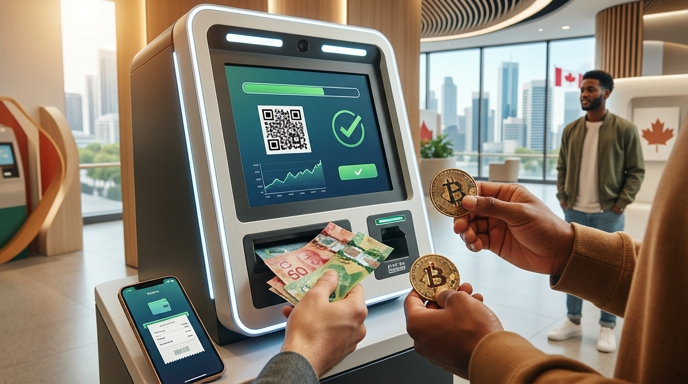
Buying Bitcoin with cash in Canada 2026 remains a common on-ramp for privacy-minded and convenience-focused Canadians. This guide explains how to buy bitcoin with cash in Canada — covering Bitcoin ATMs, in-person cash trades, peer-to-peer marketplaces, fee and limit expectations, safety checks, record-keeping for CRA reporting, and the best immediate custody practices after you buy. Follow the step-by-step sections below to convert cash to BTC safely and compliantly.
Table of Contents
- Why buy bitcoin with cash in Canada?
- Options to buy Bitcoin with cash in Canada
- Quick comparison: Bitcoin ATM vs P2P vs Cash Deposit
- Step-by-step: Buying BTC at a Bitcoin ATM in Canada
- Practical ATM tips for Canadians
- Step-by-step: In-person P2P cash trades
- Safety checklist before any cash purchase
- Custody and immediate security after purchase
- Fees, limits, and pricing expectations in 2026
- Legal and tax considerations for Canadian buyers
- Record-keeping checklist for CRA reporting
- When you might prefer an exchange instead
- Practical examples and scenarios
- What to do if something goes wrong
- FAQ — Practical buyer questions
- 1. Can I buy unlimited bitcoin with cash from an ATM in Canada?
- 2. Is buying BTC with cash anonymous in Canada?
- 3. Are in-person P2P trades safe?
- 4. Do I need to report cash purchases to CRA?
- 5. How do I store BTC safely after a cash purchase?
- Conclusion and next-step checklist
Why buy bitcoin with cash in Canada?
Cash purchases can be attractive because they avoid bank transfers, speed up settlement for in-person trades, and sometimes preserve privacy. Common scenarios include: an immediate small purchase at a Bitcoin ATM, meeting a local seller for a face-to-face trade, or arranging a bank-deposit exchange of cash via a trusted P2P platform. However, cash purchases carry higher fees and different safety and tax considerations than standard CAD-to-crypto exchanges.
Options to buy Bitcoin with cash in Canada
- Bitcoin ATMs — convenient kiosks that accept cash and deliver BTC to your wallet address or a voucher code.
- In-person peer-to-peer (P2P) trades — meet a seller through a P2P platform, escrow service, or local group and exchange cash for on-chain BTC.
- Cash deposit to an exchange — arrange a deposit with a local exchange that accepts cash deposits or uses a partner service.
- Local crypto shops or OTC desks — some shops/OTC providers accept large cash purchases, often for higher-value buyers.
Quick comparison: Bitcoin ATM vs P2P vs Cash Deposit
| Method | Speed | Typical Fee | Privacy | Safety Notes |
|---|---|---|---|---|
| Bitcoin ATM | Minutes | 6% - 15%+ | Moderate (some ATMs require phone/email) | Check machine reputation, fee display, and QR address |
| In-person P2P | Minutes once matched | 0% - 5% to seller (platform fees may apply) | High (if both parties agree) | Meet in safe public place, verify funds and wallet |
| Cash deposit to exchange | Hours to days | Low to moderate | Low (KYC usually required) | Ensure exchange is trusted and compliant |
Step-by-step: Buying BTC at a Bitcoin ATM in Canada
- Find a nearby ATM — use coinatmradar.com or similar to locate machines and view supported coins and limits.
- Check fees and limits — the machine should show the rate and commission before you confirm. Expect 6%–15% or more depending on location and provider.
- Prepare your wallet — use a non-custodial wallet on your phone and open the receive screen to show the BTC address QR code. For best security, use a hardware wallet if possible, or a mobile wallet you control.
- Start the transaction — select Bitcoin, enter amount or scan QR, then insert cash. Confirm the amount and rate shown on the ATM screen before finalizing.
- Receive BTC or voucher — some ATMs send directly to your wallet after blockchain confirmations; others provide a voucher code to redeem online. Keep receipts and a photo of the transaction for records.
- Wait for confirmations — small payments often require 1-6 confirmations; wait before considering the trade settled.
Practical ATM tips for Canadians
- Use ATMs in malls, shops, or bank-like locations — lower risk of tampering and fraud.
- Prefer machines that display the full exchange rate and commission before you insert cash.
- Take small test purchases for your first ATM use to confirm the process and wallet delivery.
- Keep your transaction receipts for CRA reporting purposes — the CRA expects records of trades affecting adjusted cost base.
Step-by-step: In-person P2P cash trades
- Choose a reputable P2P platform or local group — vetted marketplaces reduce counterparty risk. For safety best practices see our Safe peer-to-peer trading guide.
- Verify the seller — check platform ratings, user history, and reviews. Arrange small initial trades to build trust.
- Agree on price and method — determine whether the trade will be on-chain (seller sends BTC) or via an escrow service built into the platform.
- Meet in a public, secure location — choose well-lit public spaces with cameras, such as bank lobbies or staffed retail locations.
- Confirm the funds and wallet — ask the seller to send a small test amount first. If the seller requires you to send cash first, insist on escrow or do not proceed.
- Record the transaction — take screenshots of the escrow confirmation, wallet transactions, and seller profile. Keep the receipt and note the counterparty details for tax records.
Safety checklist before any cash purchase
- Never share full seed phrases or private keys during a trade.
- Use your own wallet address and scan the QR to avoid manual errors.
- Test with a small amount first to confirm delivery and process.
- Prefer escrow services where available and verify the escrow transaction on-chain.
- Bring a friend and meet during daytime in high-security public spaces for high-value trades.
Custody and immediate security after purchase
After you receive BTC, transfer it to a secure wallet you control. Leaving funds on a custodial wallet or custodial platform increases counterparty risk. If you plan to custody the coins yourself, consider a hardware wallet and follow established verification best practices to avoid counterfeit devices. For guidance on buying and verifying devices consider our article on avoiding counterfeit hardware wallets.
Fees, limits, and pricing expectations in 2026
- Bitcoin ATMs typically charge 6%–15% above the spot price. Fees vary by machine operator and location.
- P2P sellers set their own premiums — expect 0%–5% depending on liquidity and convenience.
- Cash deposit to exchanges may have bank or partner service fees; overall cost is usually lower than ATMs but requires KYC.
- On-chain miner fees apply when sellers broadcast transactions — newer wallets and wallet settings can help batch or choose lower priority fees.
Legal and tax considerations for Canadian buyers
Cash purchases are legal in Canada, but they do not exempt you from reporting obligations. The Canada Revenue Agency treats crypto as property. Every time you dispose of crypto — including trading, selling, or using crypto to buy goods — you may trigger a capital gain or loss. Keep clear records of purchase dates, amounts in CAD, receipts, and wallet addresses. If you plan to move large amounts of cash, be aware of potential banking scrutiny and FINTRAC reporting obligations for certain businesses. For a comprehensive overview of exchange selection and compliance, see our Best crypto exchanges in Canada article.
Record-keeping checklist for CRA reporting
- Timestamped proof of purchase (ATM receipt, seller invoice, escrow confirmation).
- Amount paid in CAD and price per BTC at time of sale.
- Wallet addresses involved and transaction IDs (TXIDs).
- Counterparty details for P2P trades where available (username, contact info).
- Notes on purpose of transaction (personal investment, payment received, etc.).
When you might prefer an exchange instead
If you want lower fees, higher liquidity, or the ability to buy larger amounts with bank transfers, a regulated exchange is usually a better choice. Exchanges also provide clearer KYC trails and built-in reporting tools. However, exchanges can freeze withdrawals in exceptional situations — keep that risk in mind and read our guidance on what to do if an exchange freezes withdrawals before deciding to leave funds on an exchange.
Practical examples and scenarios
- Small, immediate purchase — Buying $50–$200 at a Bitcoin ATM to test the process and get BTC into your mobile wallet. Expect higher percentage fees but instant receipt.
- Medium-sized P2P purchase — Use a P2P marketplace to buy $1,000–$5,000 from a rated seller. Meet at a bank branch during business hours and use escrow for on-chain delivery.
- Large purchase — For five-figure purchases, consider an OTC desk or a regulated exchange with fiat rails. Cash purchases become impractical above certain thresholds due to safety and reporting concerns.
What to do if something goes wrong
- If an ATM fails to deliver coins, note the machine ID and transaction receipt and contact the operator immediately.
- For a missing P2P payment, use the platform’s dispute process and retain all records. Always escalate to law enforcement if you suspect fraud involving significant sums.
- If you later discover a wallet compromise, follow a rapid incident response plan and move remaining funds to secure addresses. Our guides on rapid response and wallet security provide step-by-step help.
FAQ — Practical buyer questions
1. Can I buy unlimited bitcoin with cash from an ATM in Canada?
No. ATMs have per-transaction and daily limits which vary by operator. Larger purchases may require multiple visits and higher total fees, and could increase suspicion from banks or authorities.
2. Is buying BTC with cash anonymous in Canada?
Cash purchases offer more privacy than bank transfers, but they are not fully anonymous. Many ATMs log phone numbers or require ID above thresholds, and on-chain transactions are traceable. Keep accurate records for CRA compliance.
3. Are in-person P2P trades safe?
They can be safe when using well-reviewed platforms, escrow services, and meeting in secure public places. Follow the safety checklist above and start with small transactions.
4. Do I need to report cash purchases to CRA?
You must report dispositions that create capital gains or losses. Record cost basis in CAD at time of purchase. Keep receipts and transaction records to calculate adjusted cost base when you sell or spend crypto.
5. How do I store BTC safely after a cash purchase?
Transfer funds to a secure wallet you control as soon as possible. For larger amounts, use a hardware wallet and verify device authenticity. See our guidance on hardware wallet safety and counterfeit avoidance for detailed steps.
Conclusion and next-step checklist
Buying Bitcoin with cash in Canada is a valid option for many buyers, but it requires extra care on fees, safety, and record-keeping. Use the checklist below before your first cash purchase.
- Decide your preferred method: ATM, P2P, or cash deposit to an exchange.
- Prepare a non-custodial wallet address (preferably hardware for larger sums).
- Confirm fees and limits, and perform a small test transaction first.
- Meet safely for P2P trades, use escrow where possible, and keep receipts.
- Record full transaction details for CRA tax and future ACB calculations.
- Transfer funds to secure custody and consider a hardware wallet. Read our exchange and custody guides for next steps.
If you plan to scale purchases or prefer lower fees, compare regulated exchanges and on-ramp options. For decisions about where to hold funds after purchase and how to avoid custody risks, consult our posts on best exchanges in Canada, read our Safe peer-to-peer trading guide, and review hardware wallet verification guidance at How to avoid counterfeit hardware wallets in Canada. If you keep funds on an exchange temporarily, understand the risks and remedies in case withdrawals are frozen: what to do if an exchange freezes withdrawals.